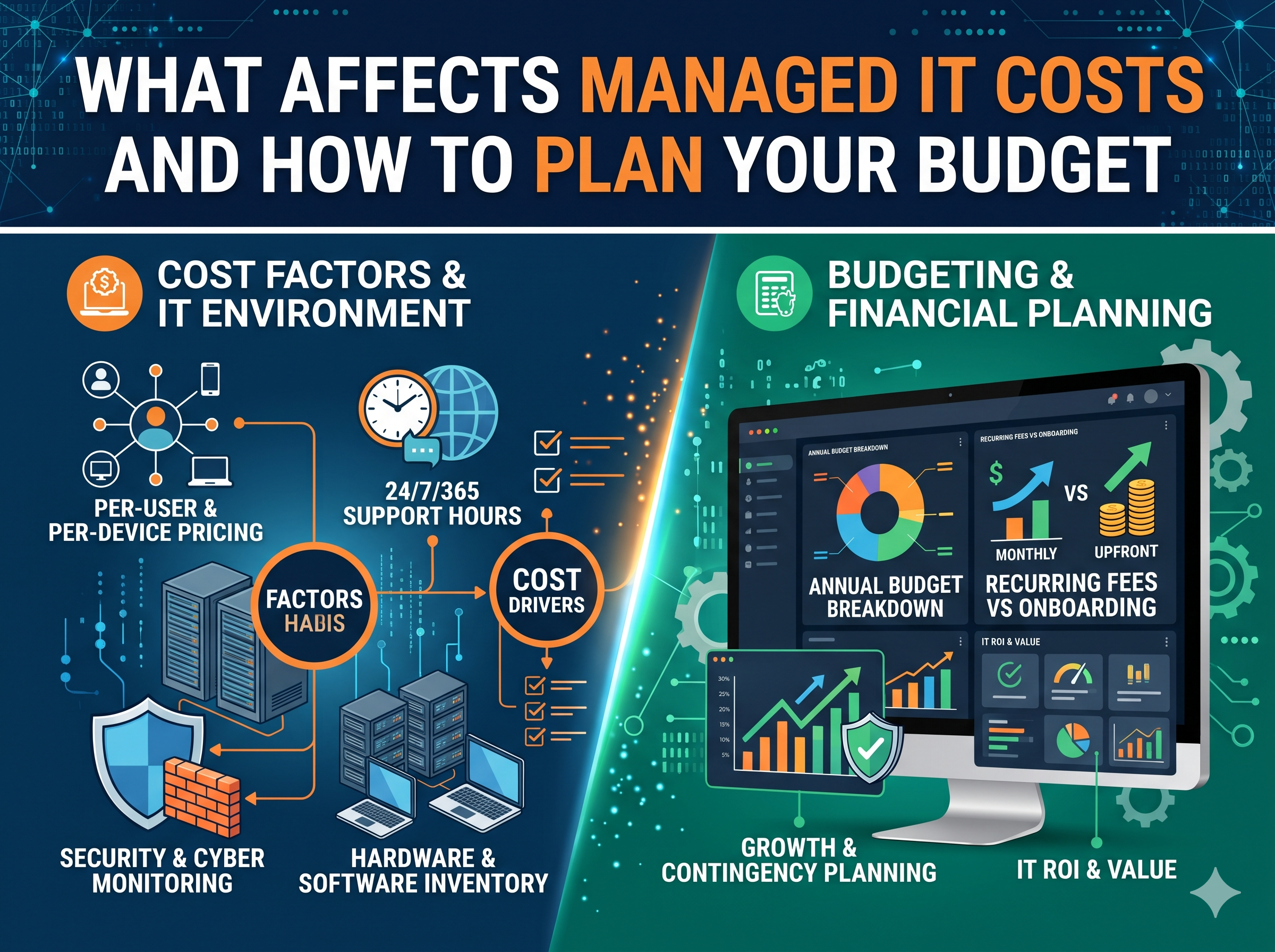
Two managed IT proposals can show similar monthly fees while covering very different work. One might include everyday employee support and security monitoring; another might price those services separately. The useful question is not simply which quote is lower, but what the business will actually pay for the support it needs.
A practical budget separates recurring service fees from setup work, project costs, software, and equipment replacement. Start with those categories, then examine the factors that change each one.
Start With the People and Systems Being Supported
Providers may price services per user, per device, or through a bundled monthly agreement. Each model needs a clear definition of what is being counted.
For a per-user quote, ask whether one employee’s laptop, phone, and desktop are covered together. For a per-device proposal, check how shared workstations, servers, and network equipment are treated. Neither approach is automatically cheaper; the answer depends on the equipment and services included.
Prepare an inventory before requesting proposals. Include employee numbers, locations, remote workers, devices, and business-critical applications. Note seasonal staffing changes and planned hiring so the quote reflects more than today’s headcount.
A business reviewing IT services from Consilien can use that inventory to frame a more specific conversation about scope and cost. The same preparation makes competing proposals easier to compare fairly.
Match Support Coverage to the Workday
Support hours affect the service a business needs. An office operating during regular weekday hours has different requirements from a warehouse running evening shifts or a team serving customers across time zones.
Ask which hours the quoted fee covers, how employees request help, and when on-site work is available. After-hours assistance may be included, separately priced, or limited to particular issues. Put the answer in the comparison sheet rather than relying on the plan’s name.
Also distinguish response time from resolution time. A promise to acknowledge a ticket does not necessarily mean the problem will be fixed within that period. Review how urgent incidents are defined and how they move through the support process.
These details help match spending to business needs without paying for coverage that serves no practical purpose.
Look Closely at Security Responsibilities
A security-first proposal should explain the work being performed, not merely list products. Ask who manages account access, software updates, endpoint monitoring, email protection, and backup administration, where those services are included.
For each item, identify whether the fee covers software licenses, ongoing configuration, monitoring, and follow-up work. A tool license and a managed service are different purchases, even when both appear under the same security heading.
Businesses with industry-specific requirements should also describe their documentation and reporting needs. Ask what assistance the provider offers with access reviews, evidence gathering, and coordination with auditors or internal teams. Price that work explicitly instead of assuming a general support agreement includes it.
The goal is a clear division of responsibilities and a budget that reflects the work involved.
Separate Onboarding From Ongoing Service
The first year may include costs that will not recur in the same form at renewal. Depending on the proposal, onboarding can involve documenting systems, deploying management tools, transferring administrative access, and setting up support procedures.
Ask for a separate description of this work and its price. If onboarding is included in the monthly fee, check whether that arrangement depends on the contract length.
Existing problems may also need separate project work. Replacing an aging server or reorganizing a network is different from supporting the environment once it is running. Request a distinction between essential setup work and improvements that can be scheduled later.
That separation helps finance understand why the first-year total differs from the recurring annual cost.
Build a Complete Annual Budget
A monthly service fee is only one part of technology spending. A useful annual worksheet includes:
- Recurring managed service charges.
- Software subscriptions not included in the agreement.
- Onboarding and transition costs.
- Planned equipment purchases and replacement projects.
- Separately billed support or project work.
- An allowance for changing business needs.
Calculate the recurring annual cost using the proposed billing schedule, then add the other categories. Ask the provider to identify exclusions so the same subscription or service is neither counted twice nor left out.
Create a second version using expected growth. Show what happens if staffing increases, a location opens, or a major application changes. There is no universal contingency percentage that suits every business; use known plans and the condition of existing systems to guide the allowance.
Review the Budget Before Renewal
A budget becomes more useful when someone owns it. Assign an internal contact to review invoices, staffing changes, upcoming renewals, and project spending with the provider.
Confirm how charges change when employees join or leave and when contract pricing can be reviewed. Schedule planning conversations early enough to spread larger purchases across the year where practical.
The strongest comparison is a written, full-year view of cost and responsibility. With that in hand, a business can choose support around its operating needs rather than a monthly headline price.