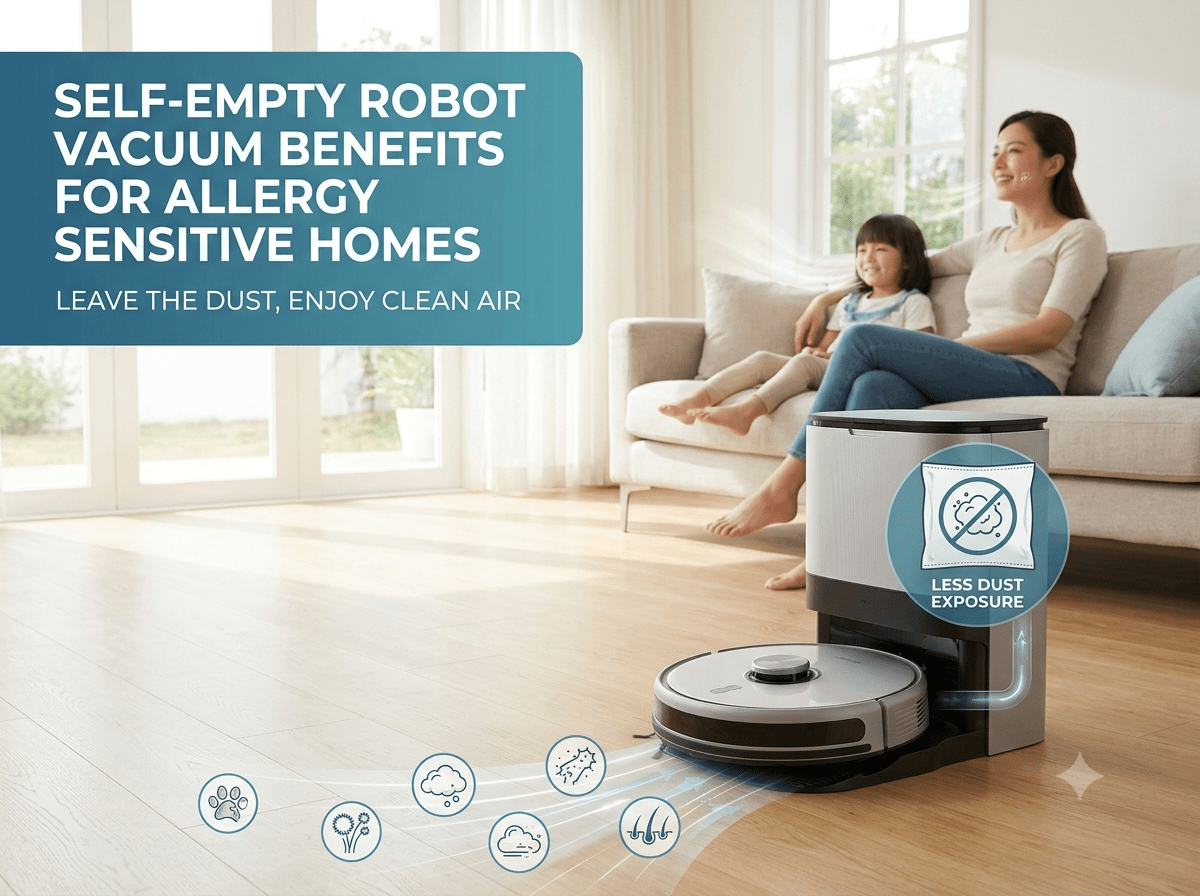
A self empty robot vacuum can make daily cleanup easier for allergy sensitive homes because you open the dusty onboard bin less often. It is not an air purifier, and it will not remove every trigger from a room. The practical win is simpler: fewer dusty bin dumps and an easier way to keep floors from building up hair, pollen, crumbs, and grit.
For homes where floors collect fine debris quickly, that difference matters. Below, you will see where automatic emptying helps, where it has limits, and how to keep the dust bag and filter routine realistic. General information only, not medical advice.
Why Manual Bin Emptying Feels Worse Than Vacuuming
The messy part is rarely the robot moving across the floor. It is the moment after cleaning, when the bin is full of hair, grit, pollen, crumbs, and fine dust. Open that bin over a trash can, especially when it is packed full, and a small puff of dust can come right back up.
In allergy sensitive homes, floor debris is rarely just “dirt.” The U.S. Environmental Protection Agency notes that indoor air can include particles from dust, pets, mold, combustion, and outdoor sources that enter the home through doors, windows, and ventilation (Source: EPA indoor air quality guide). A vacuum cannot solve indoor air quality by itself, but it can reduce settled debris when used regularly.
The routine matters as much as the device. If the bin has to be emptied every day, people often run the robot less than they should. When the robot empties into a base station after each run, daily floor cleaning is easier to keep up with.
How a Self Empty Robot Vacuum Reduces Dust Exposure
A self empty robot vacuum moves debris from the small onboard bin into a larger base station bag or container. Convenience is part of the appeal, but the bigger benefit for sensitive households is handling loose dust less often.
In a typical manual routine, the dusty contact points are easy to spot:
- Remove the robot bin.
- Open the lid over a trash can.
- Shake or tap the bin.
- Wipe away stuck hair and fine dust.
- Reinstall the bin.
With an auto empty base, the robot returns after cleaning and transfers debris into the station. You still replace the dust bag or empty the base when full, but the high-contact task is no longer part of every cleaning cycle. For that reason, many dust-sensitive households compare self empty robot vacuum options before choosing a model.
What the Dust Bag and Filter Actually Do
An auto empty robot vacuum dust bag gives debris a more contained place to collect. When dust exposure is the concern, a bagged base is often easier to manage than an open plastic bin because you can remove and discard the bag with less loose debris escaping.
Filters play a different role. They help manage what passes through the vacuum system while it runs. The Asthma and Allergy Foundation of America recommends reducing dust reservoirs and cleaning with methods that limit airborne particles where possible (Source: AAFA dust mite control tips). For a robot vacuum, that means paying attention to both the cleaning path and the maintenance parts.
Keep the maintenance simple:
- Replace the base station dust bag according to the product instructions.
- Check the robot filter on a regular schedule.
- Remove wrapped hair from the brush before it blocks airflow.
- Avoid running the robot with a full bin or clogged filter.
- Keep the base station in a place where bag changes are easy and not rushed.
Do not treat the dust bag as a set-and-forget part. A full bag can reduce performance, and a clogged filter can make the robot work harder. Homes with high foot traffic usually need shorter maintenance intervals than a small, low-dust apartment.
Where Auto Emptying Helps Most
The best fit is a home that needs frequent vacuuming but has someone who dreads opening a dusty bin. That shows up in a few everyday situations.
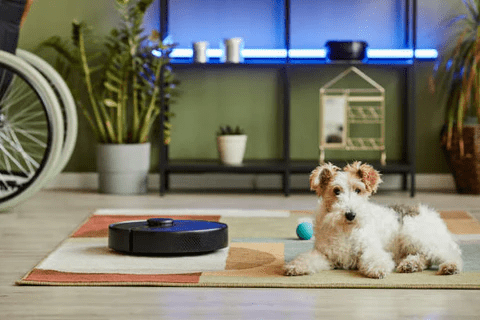
Shedding zones are the clearest example. Hair and dander collect quickly along baseboards, under sofas, near litter boxes, and around feeding areas. A small onboard bin fills fast, so automatic emptying helps keep frequent cleaning realistic.
Spring and fall entryway messes are another strong use case. Outdoor particles come in on shoes, clothing, bags, and paws. A robot vacuum will not remove them from upholstery, curtains, bedding, or the air, but it can help control what settles on hard floors and low-pile carpets.
Busy family homes also benefit. Crumbs, playground dust, and craft debris can be handled after school or dinner without creating another hands-on cleanup task.
What It Cannot Promise
A robot vacuum is a floor cleaning device, not a medical treatment. It should not be treated as a cure for allergies, asthma, or respiratory symptoms. If symptoms are serious or changing, speak with a healthcare professional.
A few practical limits still apply:
- Cannot remove particles already suspended in the air.
- Cannot clean mattresses, curtains, or fabric furniture.
- May miss corners or tight gaps if the room layout blocks access.
- Still needs brush, filter, wheel, and sensor maintenance.
- Depends on correct setup and regular dust bag replacement.
Those limits are important. The real benefit is not a dramatic health claim; it is a cleaner, lower-contact floor routine when frequent vacuuming would otherwise mean frequent dust handling.
How to Set Up a Better Routine
Start with the rooms that collect the most debris. In many homes, that means the entryway, kitchen, living room, pet area, and hallway. Outdoor dust, food crumbs, and pet hair usually show up there first.
Schedule cleaning when the home is ready for the robot. Pick up charging cables, socks, small toys, and lightweight mats before the run. Repeated interruptions make people less likely to keep the schedule.
For allergy sensitive homes, timing can also matter. Some people prefer running the robot when they are out of the room, then returning after the run is complete. That habit does not replace ventilation or air filtration decisions, but it can make cleaning feel less irritating.
If your home gets noticeably dusty after yard work, open-window days, or weekend traffic, add a short run after those moments instead of waiting for the next full cleaning day.
Set a maintenance reminder as well. The dust bag, filter, and brush are small parts, but they decide whether the vacuum keeps working as expected. Start with a monthly check, then adjust based on how quickly the bag fills.
Choosing a eufy Robot Vacuum for This Use Case
For homes trying to reduce direct contact with dust, the most useful features are the self-emptying setup, dust containment, brush maintenance, and app controls. The right robot should let you clean often without turning every run into another chore.
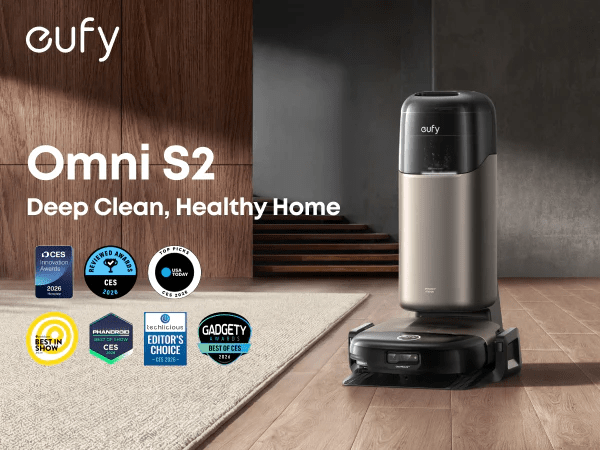
Among eufy options, eufy Robot Vacuum Omni S2 is a strong match for homes that care most about dust containment, auto-emptying, and filtration. E25 and E28 are also worth comparing if you want an all-in-one station with strong suction and easier brush maintenance. E28 adds a portable deep cleaner for stairs and fabric surfaces.
When you compare models, focus on what affects your routine: base placement, dust bag changes, hair handling, and room scheduling.
Conclusion
A self empty robot vacuum is most valuable for allergy sensitive homes when it reduces the dusty, hands-on part of cleaning. It helps you vacuum floors more often while opening the robot bin less often. The practical routine still matters: replace dust bags, clean filters, remove hair from brushes, and keep expectations grounded. If pet hair is part of the problem, compare eufy robot vacuums built for pet hair and choose the setup that matches your home size and cleaning schedule.