The phone in your pocket has quietly become a camera, a filing cabinet, a health monitor and a diary all at once. Most owners think of those features in terms of convenience, whether that means sharing vacation shots or counting steps before dinner. Few stop to consider how useful the same tools become when something goes wrong and a record suddenly matters. An injury caused by someone else’s carelessness is one of those moments. The habits people already have with their devices can turn into a surprisingly strong body of evidence.
Insurers make decisions from documents rather than descriptions, and an injured person’s word alone rarely moves an adjuster very far. The people who fare best in that process tend to be the ones who recorded things early, consistently and honestly. Twenty years ago that meant a disposable camera and a shoebox full of receipts. Today, the same work can happen almost automatically, provided a few settings are turned on and a few routines are in place. Technology will never replace medical care or sound advice, but it can make a credible record far easier to build.
Why a Digital Paper Trail Protects an Injured Person
Every injury claim comes down to two basic questions, namely who was at fault and what the harm actually cost. As mentioned by Brown, Bass and Jeter, protecting your rights after an accident depends heavily on documentation that answers both of those questions clearly. Without that proof, even a genuine injury can be treated as a matter of opinion. Photos, timestamps, medical files and expense logs turn a personal account into something an insurer has to take seriously. Digital tools simply make gathering that proof faster and more reliable than it once was, even for people who rarely think of themselves as tech savvy.
Mississippi follows pure comparative fault, which means a person who was partly responsible for a crash can still be compensated, with the amount cut in proportion to their own share of responsibility. That makes precise records unusually valuable, because small details about the sequence of events can shift those percentages. The state also generally allows three years to file most personal injury lawsuits, which sounds like plenty of time. Evidence tends to disappear far sooner, as security footage gets recorded over and witnesses forget what they saw. Starting a digital file on day one keeps a claim from depending on fading memories.
Turning the Camera Into a Scene Recorder
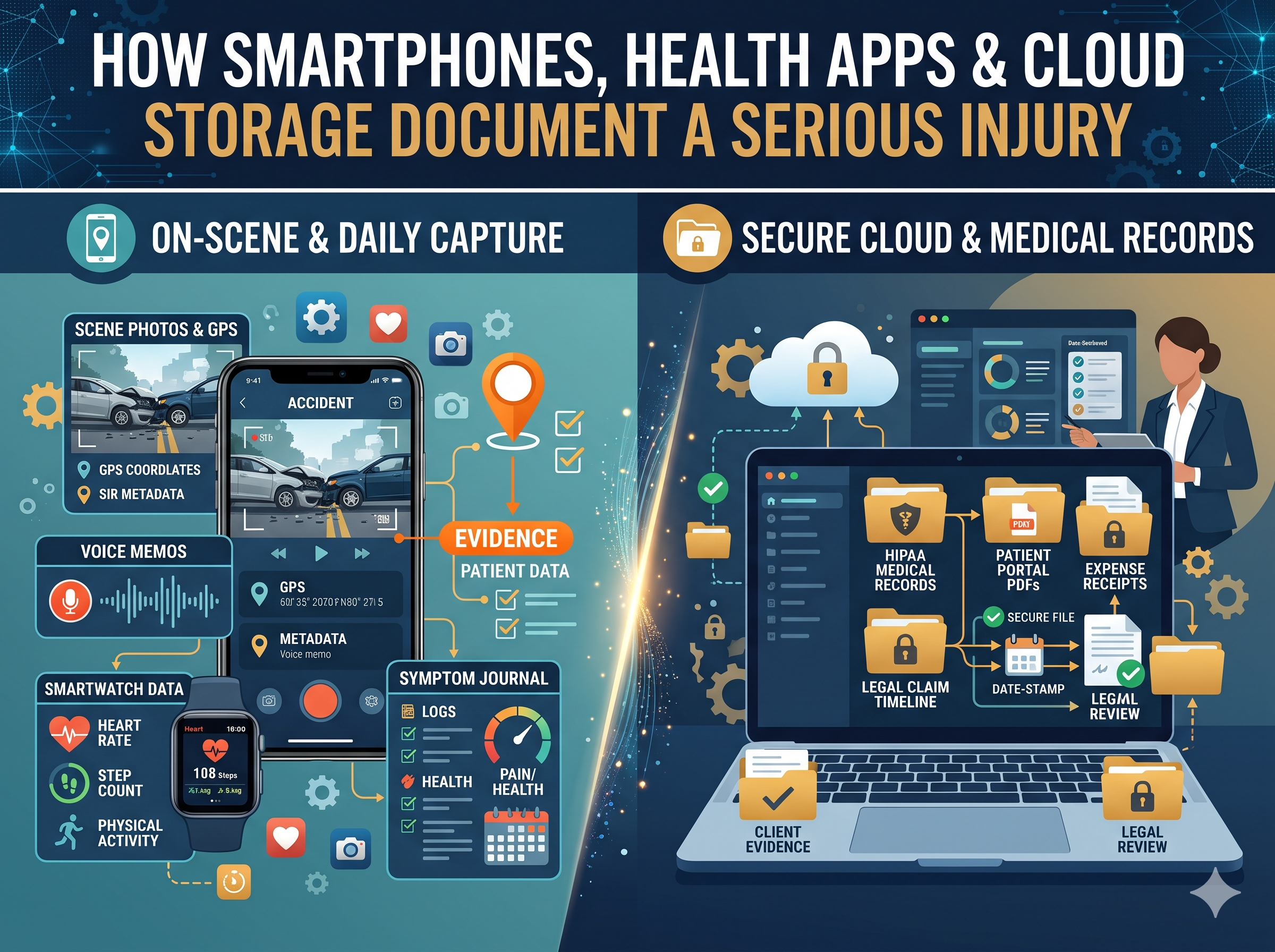
The scene of a crash or fall changes quickly, and once it is gone it cannot be rebuilt. Cars are towed, glass is swept up and skid marks fade within days, so photos taken on the spot are often the only lasting record. Capture vehicle positions, damage, traffic signals, weather, lighting and any visible injuries before anything moves. A picture of the other driver’s plate and insurance card prevents transcription mistakes later. It also helps to note any business cameras nearby, since that footage may be erased on a short schedule.
Short video clips fill in what still images leave out, including sight lines, lane markings and the pace of passing traffic. On Interstate 55 through Jackson during the evening rush, a ten-second clip can show how fast cars were moving and how little room drivers had to react. Smartphone cameras also store metadata with each file, including the date, the time and often GPS coordinates. Checking that location access is switched on for the camera app ensures that information gets saved. A voice memo recorded right afterward, describing what you saw and heard, preserves details that tend to blur within hours.
Patient Portals and the Right to Your Own Records
Most hospitals and clinics now run online patient portals where visit summaries, lab results, imaging reports and bills appear soon after each appointment. Downloading those files as they arrive builds a complete medical timeline without waiting weeks for a formal records request. Many health systems also let patients link their records to health apps on their phones, which pulls everything into a single view. That makes it simple to share a full history with a new specialist or an attorney. Naming each saved file by date and provider keeps the folder easy to search when questions come up months later.
Federal privacy law gives patients the right to copies of their own health information. Under HIPAA, providers generally have 30 days to respond to a request, and they may charge only a reasonable, cost-based fee. Knowing that right exists helps when a portal leaves out older records or detailed clinical notes. A short written request to the records department usually starts the process. A complete file links the incident to the diagnosis, the treatment and the recovery time, closing the gaps an adjuster might otherwise use to call an injury minor or unrelated.
Journals, Wearables and Expense Apps
Medical charts describe what happens in an exam room, yet most recovery takes place at home. A notes app or a dedicated symptom tracker lets an injured person log pain levels, sleep trouble, missed activities and emotional strain each day. Entries written in the moment carry more weight than recollections pieced together months later. Even two lines each evening can build a revealing picture across several weeks. The key is consistency, since a journal that stops after a few days says very little about how an injury shaped ordinary life.
Wearables add another layer of detail without any extra effort. Smartwatches and fitness bands record step counts, heart rate and sleep, and a sudden drop in activity after an injury can support a description of limited mobility. That data is not a diagnosis, but it can reinforce what doctors and the injured person report. Receipt-scanning apps turn paper bills into searchable files, and mileage trackers log each trip to therapy or a specialist. Backing all of it up to a secure cloud account protects the record if a phone is lost, broken or replaced.
Using the Same Device Without Undermining Yourself
The technology that strengthens a claim can also weaken it when used carelessly. Adjusters routinely look at public social media, and a single smiling photo from a family barbecue can be presented as proof that someone is not really hurt. Switching accounts to private and holding off on activity posts until the claim is settled is a sensible precaution. Friends and relatives can be asked not to tag you or share updates about the incident. A quiet online presence for a few months costs very little, especially compared with the cost of explaining a misleading picture to an adjuster.
Honesty matters more than volume when it comes to digital records. Journal entries should match what doctors have written, and photos should never be filtered, cropped or edited. Keeping original files preserves the metadata that gives them their value in the first place. Used with care, a phone preserves the scene, organizes medical proof and tracks the everyday cost of recovery. Those few minutes a day can shape how the months ahead unfold for someone trying to heal, and they leave the injured person with a clear account of what the recovery truly involved.