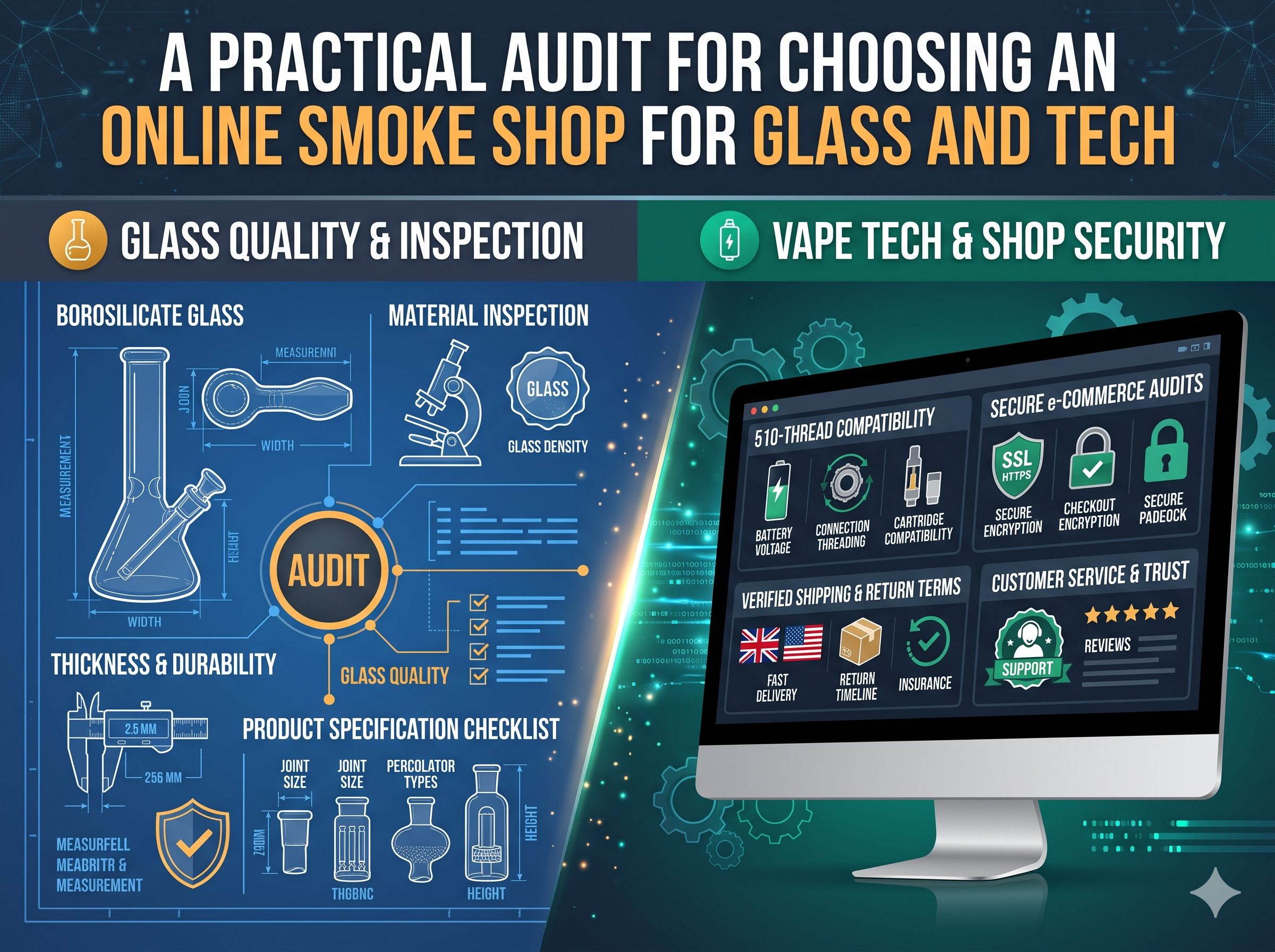
Shopping for glassware online presents a trade-off: you can compare more designs and specifications than a single display case might hold, but you cannot pick up a piece to inspect its finish or test how its parts fit. Battery-powered accessories introduce another question: will the hardware work with the cartridge and routine you have in mind? In 2026, choosing an online smoke shop is less about finding the most striking product photo and more about checking the information behind it. A useful approach separates the decision into three parts: examine the product listing, confirm hardware compatibility, and assess the retailer’s terms before paying.
Why Online Shopping Changes the Glassware Search
A digital catalog makes it easy to compare glass bongs, pipes and smaller accessories side by side. Filters can narrow a search by product type, and multiple photos can reveal design details that might be hard to see from a shop counter. Online listings can also give buyers room to check dimensions, included components and maker information at their own pace. That convenience explains the appeal of shopping online, but a larger selection does not make every listing equally informative.
Start by deciding what the piece must do in the space where it will be used and stored. A tall design may look impressive on a screen yet be awkward on a crowded shelf. A removable component may make cleaning more practical, but only if the listing identifies it clearly enough to understand the assembly. Compare the product description with the photos: do they show the same shape and included parts? Can you tell what is supplied and what is merely pictured alongside it? These questions are more useful than treating “premium” as a specification.
Online shopping is particularly helpful when a buyer wants to explore artisan-crafted designs or compare pieces described as borosilicate glass. Those terms are starting points for inspection, not substitutes for it. An attractive finish, a material label or a high price cannot, by itself, establish how a particular item was made or how it will hold up in everyday handling.
 Image by pch.vector on Magnific
Read the Glass Listing, Not Just the Photos
For premium glass bongs and other glassware, inspect the individual product page before judging the shop as a whole. Look for stated material, height or other relevant measurements, a description of removable parts, and any connection or joint information needed for replacement pieces. Clear photos should show the actual configuration from more than one angle, including details that matter for assembly. If you are comparing two similar products, note which specifications each listing makes explicit rather than filling gaps with assumptions based on appearance.
Move from a retailer’s category page to the specific item and read its description closely. A collection can help you discover styles, but it cannot establish the material or workmanship of every piece it contains. Compare individual listings on the details that affect your purchase, especially size, components and any claims about who made the item.
“Borosilicate” should be treated as a material claim about a specific product when its listing says so, not as a property to infer from the shape of the glass. Likewise, “artisan-crafted” is most useful when the seller identifies a maker, brand or production details that a buyer can check. Neither phrase is a guarantee against breakage. Glass still needs careful handling, and construction details matter alongside the stated material.
Digital tools can help with an authenticity check. If a listing names a manufacturer and model, compare those identifiers, product images and published specifications with the manufacturer’s own information where available. Check whether included parts and packaging descriptions align. Reviews may reveal recurring discrepancies between photos and delivered products, but a single enthusiastic rating is weak evidence. The goal is not to find a universal verification badge; it is to see whether the product details remain consistent across the sources that describe it.
Match Battery Technology to the Intended Setup
Traditional glassware and modern vaping accessories serve different setups, yet many buyers browse both categories in one shopping session. That makes it tempting to treat a shared catalog as proof that the products are interchangeable. They are not. A glass piece should be assessed for its own dimensions and components; a battery should be assessed against the cartridge and operating instructions intended for it. Keeping those checks separate prevents a convenient shopping experience from becoming a compatibility guess.
For 510-thread batteries, the connector is an important first filter, but matching threads alone do not settle every fit question. Cartridge dimensions, how the cartridge sits in the device, and the battery’s controls can all affect whether a particular combination is suitable. Read the device manual and the cartridge information rather than relying on a broad “works with 510” label. Check how the battery is activated, whether its settings can be adjusted, and what the manufacturer specifies for charging and care. These details are more actionable than a vague promise of powerful performance.
DubCharge brings together high-end glassware and its own innovative 510-thread hardware. As a reputable online source for smoking accessories, it offers a place to compare glass products while assessing each item on its own specifications. Its support information describes its batteries as compatible with most 510-thread cartridges; check compatibility against the product information for each battery and cartridge. That is useful brand-specific guidance, not a universal rule for every battery or cartridge. Before purchasing any combination, match the exact product information and instructions for both components. A shop that makes manuals and product details accessible gives buyers a better basis for that comparison.
Audit the Retailer Before You Pay
A convincing product page is only part of a sound purchase. The retailer also needs to explain who will handle the order and what happens if there is a problem. Check for accessible contact information, terms of sale, privacy information, shipping details and return or claims procedures. Read those pages before checkout, when you can still compare options without pressure. If a marketplace or multi-seller site is involved, identify the actual seller and the party responsible for fulfillment and returns.
The Office of Consumer Affairs’ online-shopping guidance recommends checking vendor contact details, shipping and return policies, reviews, privacy practices and payment options. The same habits apply when considering an online smoke shop. Look beyond an overall star rating: reviews describing the condition of delivered glass, whether items matched their listings, and how issues were handled offer more context. Compare feedback across sources where possible, and pay attention to repeated patterns rather than one unusually glowing or angry account.
At checkout, confirm the final price, including shipping and any other displayed charges. Use a payment method that offers appropriate purchase protections and avoid sending payment through an unexpected channel requested outside the normal checkout process. An HTTPS connection is a sensible baseline for entering personal information, but the padlock icon does not prove that the merchandise, customer service or return terms are good. A secure-looking page and an accountable retailer are different things.
Take particular care with claims that are difficult to evaluate from a screen. A description promising exceptional durability, flawless craftsmanship or universal compatibility deserves more scrutiny than a listing that specifies measurable features and names the relevant product. If the information that matters to your decision is unclear, compare another item or seller before committing. A retailer’s willingness to publish usable details is itself part of the shopping experience.
Plan for Delivery and What Happens After Arrival
Glass and battery hardware call for different checks once an order is placed. Before paying, read where the retailer ships, what delivery options cost, and how its policies address damaged, incorrect or unwanted items. Note any instructions for reporting a problem, including whether the seller asks for photos of the package and product. Check the terms that apply to the specific item; a general policy page may distinguish between product categories or conditions of return.
Keep the order confirmation and a record of the product description you relied on. When the package arrives, inspect the glass and its included components before putting anything into use. Compare the item with the listing, and follow the retailer’s stated process promptly if something is missing or damaged. For battery-powered hardware, use the manufacturer’s instructions for setup, charging and maintenance rather than assuming that accessories with similar-looking connectors operate identically.
A final pre-checkout pause can make the decision simpler: can you verify the product’s key details, confirm the intended hardware fit, understand the seller’s policies and see the full cost? If those four points are clear, you have a firmer basis for choosing glassware and vaping accessories than photos, slogans or ratings alone can provide. Buy only products appropriate to your age and location, and treat clear information as an essential feature of the shop itself.