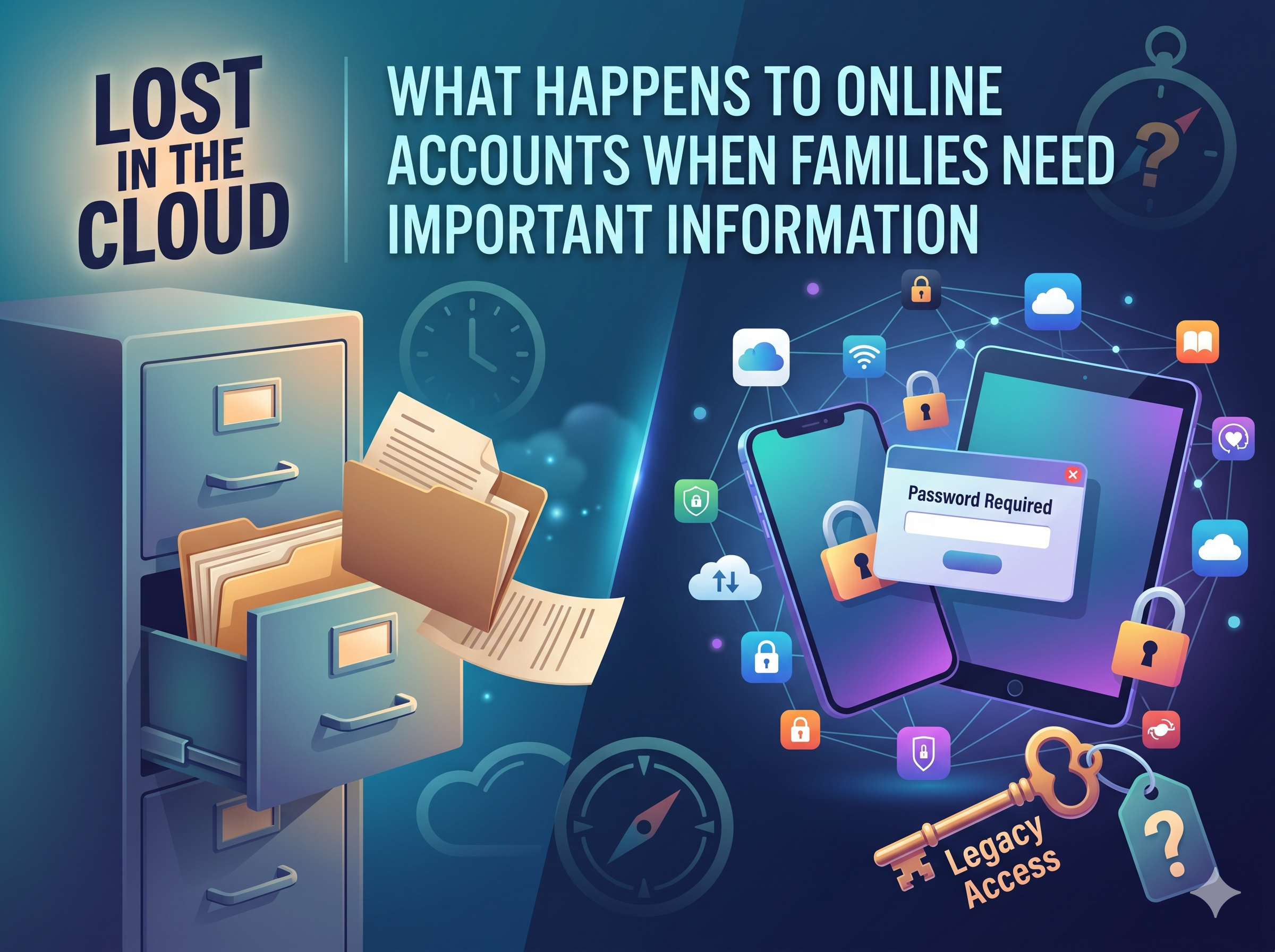
Families used to look for important records in filing cabinets, desk drawers, folders, and bank envelopes. Today, much of that information sits behind passwords, two factor authentication, cloud storage, mobile apps, email accounts, and digital dashboards. A bill may arrive through an app instead of the mail. A policy document may be stored in a portal instead of a folder. A business login, subscription record, tax document, or account statement may exist only online. When relatives need reliable information, the challenge is often not whether the information exists, but whether anyone can reach it.
This issue fits the modern technology environment because personal data is no longer kept in one place. People rely on smartphones, password managers, document scanners, email archives, payment apps, cloud drives, and account recovery tools every week. These systems make daily life more convenient, yet they can create confusion when someone else needs access during a serious family matter. A practical digital record system does not need to expose private details unnecessarily. It needs to make account locations, device access, key contacts, and essential instructions easier to identify when timing matters.
Where estate planning meets digital account access
Estate planning has traditionally focused on documents, property, beneficiaries, and decision-making authority, but modern households now carry a large digital layer that cannot be ignored. Important information may be tied to email accounts, banking apps, investment portals, insurance platforms, cloud folders, social media profiles, device backups, and paid subscriptions. Before the phrase estate planning becomes relevant, the practical issue is simple. Families often need to know what exists, where it is stored, who has permission to manage it, and how access can happen without violating privacy rules or platform policies.
According to www.ledlawyers.com, this is why estate planning now often includes conversations about digital records and online access. It is not just about listing assets in a traditional sense. It can also involve identifying account types, saving key login locations, documenting recovery methods, and clarifying which trusted person can handle specific digital matters if needed. Because many platforms have their own rules, vague instructions may not be enough. A clear inventory can reduce confusion, especially when accounts contain financial records, recurring payments, tax documents, family photos, business files, or personal communications that may be difficult to locate later.
Online accounts can hide important details
Online accounts are useful because they organize information quickly, but they also hide details behind layers of security. A family may know that a person used a certain bank, but not know whether statements were delivered by email, stored in an app, or linked to a separate investment portal. They may know about a phone bill, yet miss streaming subscriptions, cloud storage fees, domain renewals, digital advertising accounts, or software tools connected to a personal card. These records can continue generating charges, notices, and alerts long after someone else needs to review them.
Digital services also separate information across different identities. One person may use a personal email for financial accounts, a work email for software tools, and a separate address for family photos or storage. Some accounts rely on phone verification, while others use authentication apps or backup codes. If no one knows these details exist, even a trusted relative may struggle to identify what requires attention. Good organization does not mean handing over every password without limits. It means creating a reliable map of important systems so the right people know where to look and what requires care.
Privacy and access need careful balance
Access planning should respect privacy, because digital accounts often contain more than practical records. Email inboxes may include private conversations, medical messages, business discussions, saved receipts, photos, legal notices, and personal notes. Cloud drives may contain family memories alongside sensitive documents. Phones may store financial apps, contact lists, location data, and authentication tools. Because of this, families should avoid casual password sharing or vague verbal promises. A more careful approach separates what needs to be found from what should remain private unless access is truly necessary.
Technology companies also have rules that can limit what relatives or trusted contacts can do. Some services provide legacy contact settings, inactive account tools, emergency access options, shared vaults, or account recovery procedures. Others may require formal documentation before releasing or closing an account. These differences matter because a single password list may not solve every problem. A better arrangement includes account names, general purpose, access method, recovery options, and any official contact process available through the platform. That approach protects private information while still giving families a workable path when they must manage urgent digital matters.
A useful record system should be practical and current
A digital record system works best when it is simple enough to maintain. A person can start with broad categories such as financial accounts, insurance portals, email addresses, cloud storage, device access, subscriptions, social media, business tools, and important documents. Each category can include the platform name, the purpose of the account, the email address connected to it, whether two factor authentication is used, and where recovery information is stored. The goal is not to create a messy document full of exposed passwords. The goal is to make essential information findable.
The system also needs regular review because digital life changes quickly. People replace phones, update emails, open new accounts, cancel services, change authentication apps, and move documents into new folders. An old record can create almost as much confusion as having no record at all. A calendar reminder every few months can keep the list accurate without turning it into a major project. It also helps to store instructions in a secure place, such as an encrypted password manager, a locked document repository, or another controlled system that a trusted person can reach only under the right conditions.
Better digital organization protects families from confusion
When families need important information, technology can either reduce stress or create more problems. The difference often comes down to preparation. A scattered digital life forces relatives to search through devices, guess account names, look for emails, and piece together recurring payments without knowing what matters most. A clear digital record gives them a more reliable way to identify accounts, documents, contacts, and access requirements. It also lowers the chance that important notices, financial records, or personal files will be missed because they were stored behind an unfamiliar app or email address.
Modern planning should treat digital information as part of real life, not as a separate technical issue. Devices, accounts, cloud storage, and online records now hold many of the details families depend on during difficult moments. Keeping those details organized does not require exposing every private message or handing control to the wrong person. It requires a thoughtful system that respects security, privacy, and practical access. As more personal and financial activity moves online, families benefit from knowing that important information can be found when it truly matters.