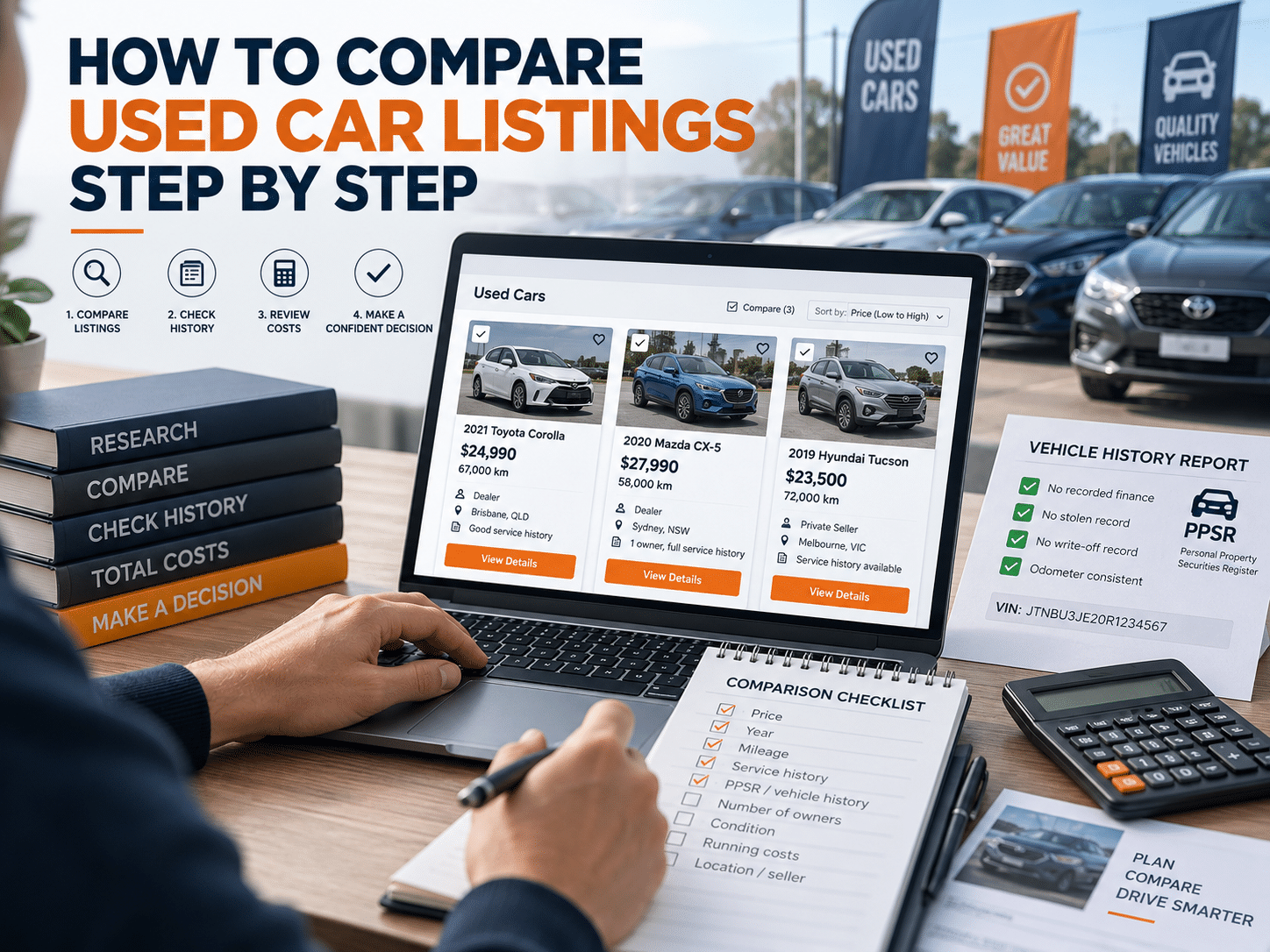
Most searches for used cars go sideways because buyers compare cars that were never comparable in the first place. When you lock the criteria first and judge every listing the same way, it’s easier to see which cars fit.
Lock in your comparison criteria first
Start with a short written brief for yourself before you open any tabs. Pick one model and one or two trim levels that have the safety gear and features you won’t compromise on. Set a year band, a budget ceiling, an odometer ceiling and a fuel type that suits your driving. Write down your deal-breakers too, like a complete logbook or no repairable write-off past. That brief stops you cross-shopping a small hatch against a family SUV just because the monthly repayments look close.
Keep that brief on paper or on your phone while you browse. If a car falls outside it, don’t bend the rules to fit it in.
Pull together a tight shortlist
Once your criteria are set, pull five to eight cars that meet them exactly. Match variant with variant, because a base model and a top-spec grade don’t have the same kit or resale strength. Save each ad with the asking price, year, odometer reading and seller type attached. You can’t compare fairly when one listing hides the basics and another spells them out. Depreciation hits early years hardest, so a newer car with higher kilometres can list near an older car with lower kilometres and still be fair value.
Don’t rank them at this point. You’re making sure every car on the page could actually suit you.
Photos only tell part of the story.
Price each car against the market
Start with the ads themselves and get them side by side on one screen before you open a price guide or a history search. Browsing a dealership’s carsales listings can help you compare vehicles, with photos and write-ups presented in a consistent format. That consistency lets you spot price gaps that come from year or kilometres rather than photo tricks.
Then check each contender against RedBook or Glass’s Guide for the same year, variant, transmission and odometer reading. If two cars sit well above guide range, they aren’t good value just because one is a few hundred dollars less. Guides aren’t perfect, but they stop you treating two overpriced cars as if one is a bargain.
Note the asking price next to the guide range for each car. You’ll see which asking prices need further explanation once variant, condition and included work are taken into account. Keep your notes simple enough to scan later.
Screen the VIN and the paper trail
Ask every serious seller for the 17-character VIN before you book an inspection. Use it to run a PPSR search and, where you can get one, a separate vehicle history report from a commercial provider. A PPSR search can show finance owing, written-off status, stolen status and registration details.
It won’t show service history and it can’t confirm the odometer reading is true. Treat it as a finance and identity screen, not a full mechanical past. For service proof, ask for the logbook with stamps and receipts that line up with the odometer.
If a search shows finance owing, don’t pay a deposit until the seller explains the documented payout process in writing and you see how settlement clears title. Private sellers and dealers handle this differently, so get the payout letter and timing sorted before money moves. No paperwork means no deal.
Look for write-off flags and odometer inconsistency alerts in the history report and match them against logbook dates. If the numbers jump around, ask why and walk on if the answer is vague. Two cars with the same odometer reading can tell very different stories once you line up stamps against dates.
Score condition and work out the drive-away total
Photos reward tidy paint and hide worn seats or bald tyres. Score each car out of ten for exterior, interior, tyres and paperwork so one strong area can’t mask a weak one.
Then work out the drive-away total for each shortlisted car. Add stamp duty and transfer fees to the asking price, plus any roadworthy repairs the seller hasn’t done. Call around for quotes on tyres, brakes, battery and a major service if the logbook shows one is due. A cheap car that needs four new tyres and a full service is rarely cheap once those quotes land in the sheet.
Ask which repairs are included before delivery and record any agreement in writing. Dealer cars may qualify for a statutory warranty, but eligibility and exclusions matter. Compare the written cover rather than assuming every dealer car has the same protection. A lower asking price can leave less room for repairs if the maintenance needs are overlooked.
Take your final one or two cars for a drive that mixes suburban streets and a faster arterial road. Listen for gearbox hesitation, brake shudder, steering pull and suspension knocks over bumps. Book a pre-purchase inspection with an independent workshop before you sign anything, and ask for photos of anything found on the hoist.
The best comparison comes down to the evidence. Stick to the brief and let the paperwork pick the car.