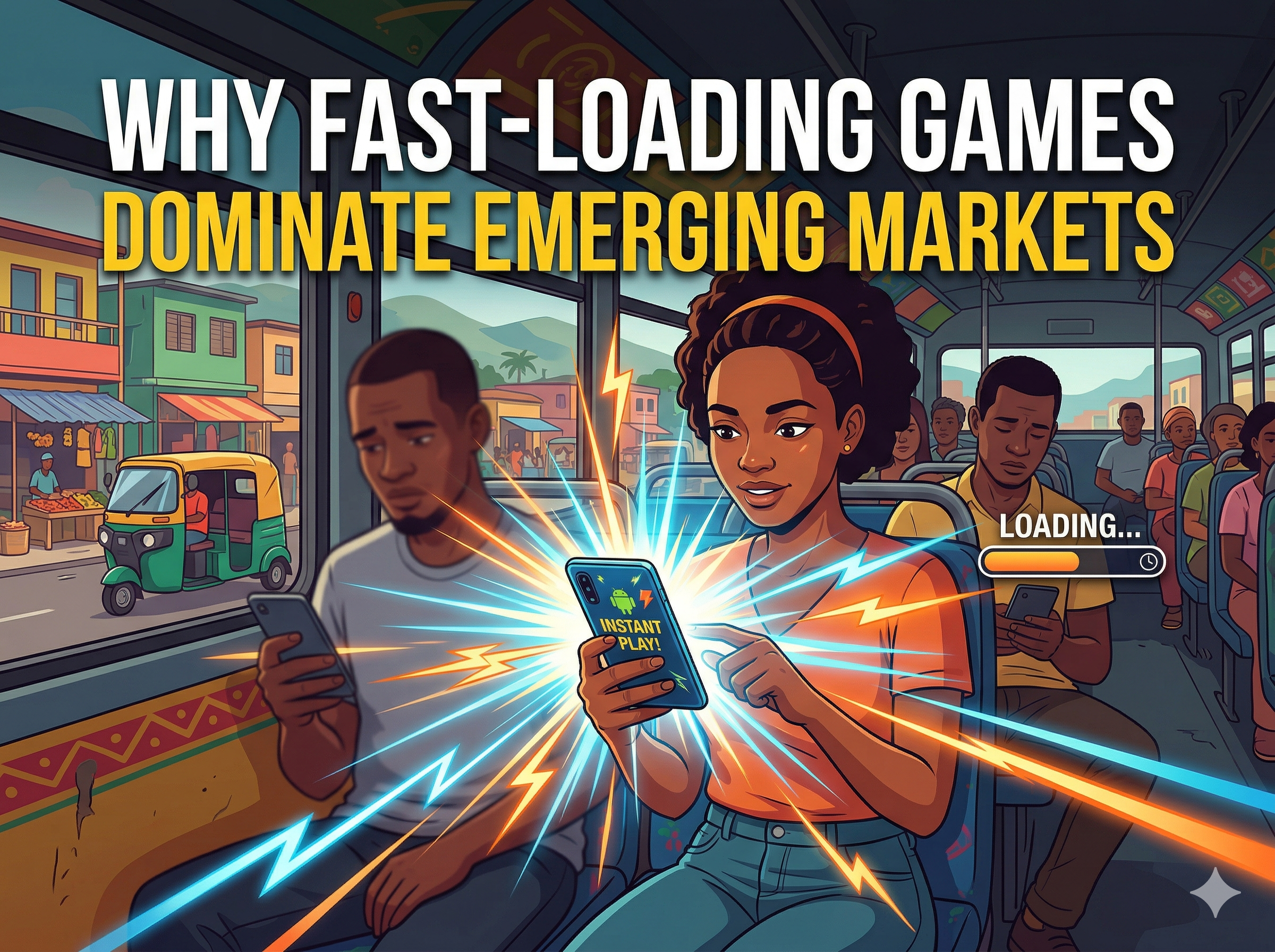
You can usually tell within two seconds if a game is going to stay open. Not from the design. Not from the theme. Just from how it loads. If it jumps in straight away, you’re fine. If it hangs, even slightly, there’s already that hesitation. And in a lot of emerging markets, that hesitation is enough to close it before it even starts. That’s not about impatience. It’s more practical than that.
The Network Reality Most Platforms Have to Work Around
In regions across parts of Africa, South Asia, and Latin America, average mobile speeds still fluctuate a lot during the day. It’s not just “slow internet.” It’s inconsistent. That’s something platforms like Betway have handled quite well over time, shaping their game offering so it opens quickly and runs without friction, even when the connection isn’t at its best. You might be on 4G, then drop to something much lower without really noticing why. Or you’re sharing bandwidth with a lot of users at the same time. Or switching between WiFi and mobile data mid-session. From a technical point of view, that creates a problem right at the start of a game. Most traditional slot games can weigh anywhere between 15MB to 50MB once everything is loaded, especially if they include high-resolution assets, layered animations, and full audio packs. That’s fine on stable broadband. It’s a different story on a fluctuating mobile connection. So developers started adjusting.
Why Smaller Game Packages Win
Instead of loading everything upfront, newer games designed for these markets often come in much lighter initial packages. Sometimes under 5MB just to get the core game running. Everything else loads in pieces. You spin, and only then does part of the animation or sound get pulled in. Background effects might never fully load if they’re not essential. Some games even reduce animation frames dynamically if the connection slows down. It’s not something you’re meant to notice. But you feel it in how quickly the game becomes playable. That first interaction happens almost instantly, which is what matters most.
The Trade-Off Developers Quietly Accept
There’s a reason not every game is built like this. When you compress assets, reduce animation complexity, and limit preloading, you lose some visual depth. Transitions can feel slightly sharper, less cinematic. Sound design becomes more minimal. But in these markets, that trade-off makes sense. Because players will take a slightly simpler game that works immediately over a heavier one that might stall at the worst moment. And over time, that preference becomes very clear in the data. Higher session starts, lower bounce rates, longer overall engagement. Not because the game is “better,” but because it actually gets a chance to be played.
Mobile Behavior Changes the Design Priorities
There’s also how people are accessing these games. In many of these regions, over 80% of users are on mobile, often on mid-range Android devices with limited RAM and older processors. That adds another layer. It’s not just about network speed anymore. It’s about device performance. If a game pushes too much at once, it doesn’t just load slowly. It can lag during play, overheat the device, or even crash the browser. So optimization isn’t optional. It’s part of making the game usable at all. Platforms like Betway have gradually shifted toward offering more of these lighter, quicker-loading titles in markets where that matters. Not as a headline feature, but because heavier games simply don’t perform as well there. And the difference shows up pretty quickly in how long people stay.
Short Sessions Make Speed More Important Than Features
There’s another layer that doesn’t always get mentioned. Play sessions tend to be shorter. Not because people enjoy games less, but because they’re fitting them into smaller windows. A few minutes during a break, while commuting, between other things. If a game takes 10–15 seconds to fully load, that’s a big chunk of the session gone before anything even happens. So players naturally lean toward games that start instantly and let them get into it without waiting. It becomes less about exploring features and more about how quickly that flow actually begins. That first spin, that first interaction, matters more than anything that comes later. If it happens straight away, the session feels smooth, almost effortless. If it doesn’t, it already feels like time is being wasted. And when you’re only there for a few minutes to begin with, that’s usually enough to move on. Over time, that pattern sticks, and the games that respect it are the ones people keep coming back to.