In an era of information overload, people take an average of just 3 seconds to determine whether they want to continue engaging with your content. So, is your brand visual enough to make users stop?
Traditional graphic design is increasingly becoming homogenous, and the type of visual that actually captures consumers’ attention is now a form of expression that is spatial, immersive and technologically advanced. AI 3D generator technology allows brands to leap from using two-dimensional graphics to three-dimensional graphics and therefore provides brands with an opportunity to create tangible, immersive and memorable brand images.
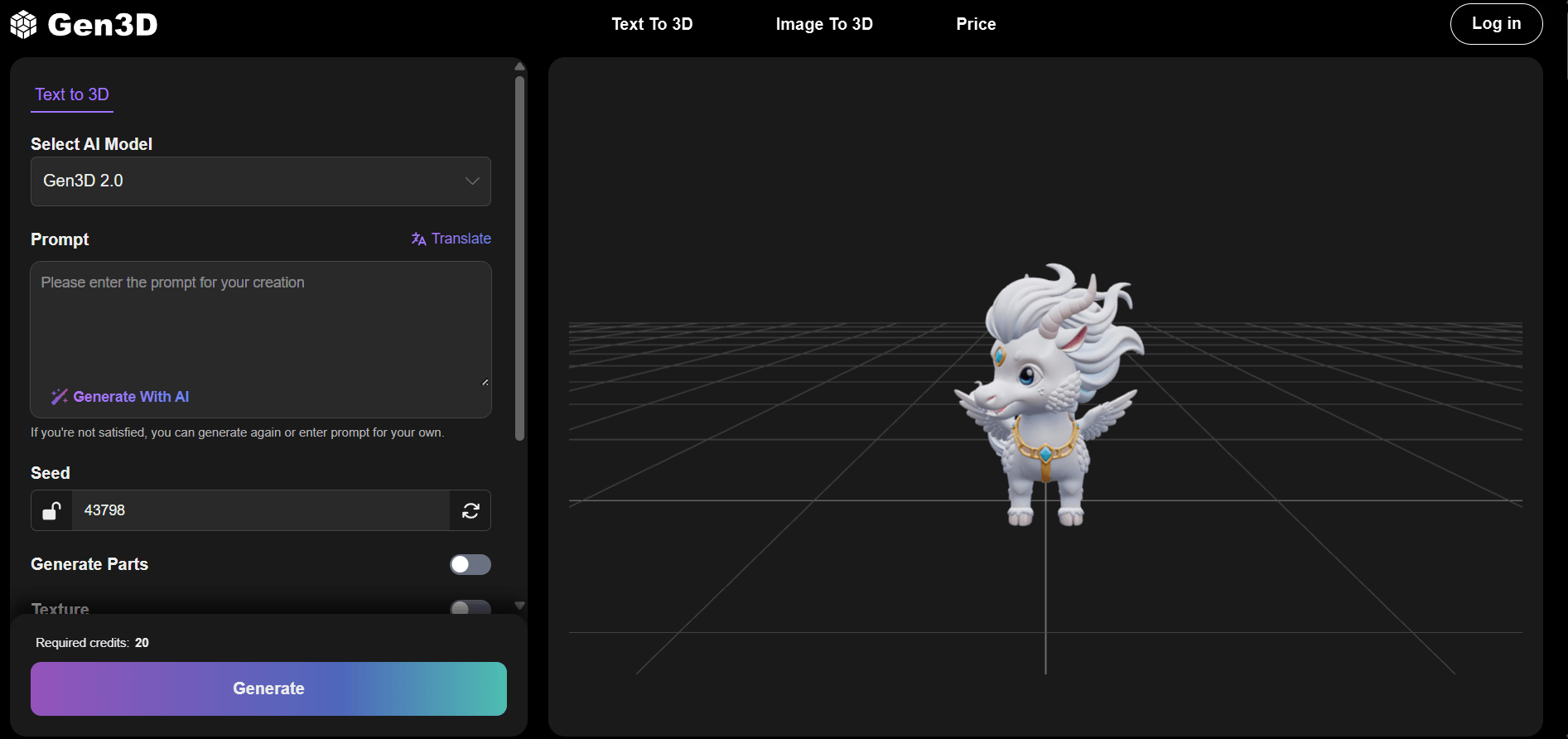
The use of AI 3D generation technology will allow brands to take their brand visuals beyond simply being “seen” to being “experienced”—things such as e-commerce main images to social media cover pictures or product displays to brand video openings. In a highly competitive digital marketplace; visual impact = influence—3D visuals are becoming the new threshold for entry into every competitive marketplace.
If your brand stuck in the 2-dimensional era, then you might have already lost your chance to compete with the real competition.
Why is it becoming increasingly difficult for traditional visuals to stand out?
Today, with an increasing amount of online content, the competition among visual media has reached a saturation point. With all of the advertisements, short films, etc. hitting consumers’ screens each day, and many companies using similar layouts (colors, structure, etc.) and template-based materials to create their brand image, all of the brands appear very similar in style, although they are visually appealing.
While the introduction of various design tools has lowered the entry-level of creativity for many designers, the availability of these tools has made it easier for brands to produce a more homogeneous look for their visual content. Designers utilize pre-designed templates, resource banks of visuals, and “generic” layouts to create their branding, and this has, over time, caused the visual elements of each brand to lose their distinctiveness. As the users (consumers) of branding develop their taste in aesthetics, and are exposed to more dynamic animations and immersive experiences, their expectations for visual communications will have evolved to the point that they now fatigue from looking at “ordinary flat graphics.”
In addition, the attention span of consumers has reached unimaginable lows; as consumers continue to scroll through social media at an alarming rate, if a visual doesn’t provide immediate impact, visual depth/effectiveness, and memorability, it will be disregarded. While the traditional two-dimensional forms of visual expression are still functional for the purpose of communicating information, it has become increasingly difficult for designers to differentiate their work from other designers’, thus making it more difficult to create a visual distinction/exclusive advantage due to the traditional two-dimensional form of the design.
There is a lot of brands out there with similar visuals and, thus, one can find that the ones that tend to be the most noticeable are those brands that do not hesitate to break through the border of two-dimensionality and develop a three-dimensional experience.
Three major visual advantages brought by AI 3D Generator
1️⃣ A sense of space and realism enhances the brand’s premium feel
“Texture,” as expressed visually through a brand, influences first impressions of a brand. The ability of the AI 3D generator to create a sense of space and realism contributes to building an overall image of a premium brand.
The use of more sophisticated and realistic light simulations, material rendering and structural modeling, means that the image can now be perceived as a three-dimensional object rather than simply as 2-dimensional space. The way in which the surface of the metal reflects light, how the glass appears to be transparent, the way the fabric appears to be textured, and the way in which the edges of a product reflect light contribute to reinforcing the consumer’s perception of a brand’s quality.
When utilizing 3D-generated images to present products, the end product can be nearly indistinguishable from photographs of products in many cases and will often look even better than those taken with traditional photography. Additionally, since 3D-generated images don’t require complex set construction to create ideal lighting, angles and environments for displaying products, products may appear more polished, stable and professional than they actually are. Therefore, the “tangibility” that is visually expressed through 3D-product generation provides enhanced professionalism to the image of a brand.
On the psychological level with consumers, consumers often associate perceived premium quality with trust. Therefore, when the product is perceived as being more realistic, solid and detailed, there is an increased likelihood that the consumer will view it as being “trustworthy” and “worth purchasing.” Thus, while visual premium is not decorative, it is more of a mechanism for building trust in the brand at first sight.
2️⃣ Significantly enhanced freedom of creative expression
In conventional visual production, real-world limitations (constraints of the area, budget, filming conditions, etc.) will generally limit creativity; thus, many bold ideas ultimately must be reduced to and fit within the constraints of reality. However, the introduction of the AI 3D Generator is working to dismantle these real-world boundaries.
Using Text to 3D technology, companies can construct scenes that are either difficult to build or that do not even exist within the real-world (i.e., product displays that “fly” in mid-air, buildings that “fly” over dynamic urban environments, etc.). These images can be constructed with little cost (no need for expensive sets) or extensive post-production; thus, allowing creativity to expand outside the limits of the physical realm.
Most significantly, abstract ideas can be made concrete and visualized. Light structures and metal materials can communicate technological concepts. Spatial compositions and dynamic perspectives can convey ideas about the future. Streamlined structures and motion paths provide the means to communicate speed. Data and geometric language can provide a means to communicate intelligence. The brand concepts that were once difficult to communicate verbally can now be communicated through stereoscopic vision.
By eliminating scenes and equipment from your photographic process, you are able to make creativity itself the primary focus. Instead of optimizing photographs to be visually appealing, you are creating a means for imagination to be free — allowing a brand to create its own visual universe instead of being limited to real-world objects.
3️⃣ Dual optimization of cost and efficiency
In the production of branded content, constraints of both time and budget continue to be the biggest hurdles to overcome. When creating content using traditional methods of shooting video, many different areas must be coordinated to complete the project such as location rental, lighting equipment set-up, photography crew and post-production work; the complexity of this type of coordination is not only expensive, but very time consuming. If an adjustment to the content’s direction is necessary, it requires reinvesting both time and money.
AI 3D Generator dramatically reduces the complexity of the process creating branded content. By removing studio shooting, repeating lighting set-ups and large modeling or rendering teams, brands can now generate and optimize high-quality visual content in a shorter time frame. Additionally, brands can build the scene, adjust the materials and lighting effects in a digital environment and see the results immediately.
Additionally, it allows for quick experimentation of various visual solutions, with the ability to produce different color palettes, styles, and settings, while utilizing data to determine which design is best received. This means that today’s brands do not have to “take a risk” on a design, rather can test all of them using quick, cost-effective methods.
In an ultra-competitive marketplace, efficiency is both a competitive capability (external) and an internal operational benefit Efficiency = Speed of Market Response = Competitiveness. The faster that brands can launch new visual elements, react to trends and optimize advertising creatives, the better positioned they are to compete for possible (and desirable) attention.
Practical Applications of AI 3D in Branding
If the concept entails establishing the direct responsibility of an action, the scenario establishes its value as being of interest to a specific group. The AI 3D Generator’s ultimate point of value is not what it can produce; it is its potential to be used in a particular marketing situation as a measurable and convertible method of achieving visual effectiveness.
1️⃣ Upgrade of e-commerce product main images
On all eCommerce sites, the main image will determine the click through rate. Standard white background images are no longer sufficient to help distinguish products from one another. 3D scenes help to create a much more atmospheric visual space around your product instead of being flat and two dimensional.
For example:
- Skincare products are suspended within a transparent glass structure, enhancing the sense of technology.
- Digital products are placed in a futuristic light and shadow space, highlighting their performance attributes.
- Food products combine realistic materials with dynamic elements to enhance their “appetizing” appeal.
You can easily create high-quality images for display purposes without shooting actual images, and you can change the background and design of these images anytime based on different holiday or promotion themes.
2️⃣ Official website Hero Banner visual upgrade
The Hero Banner on the official website’s homepage is the first screen displaying the brand image. Compared to ordinary flat posters, 3D visuals have a greater spatial impact.
Brands can build their own unique 3D visual language, for example:
- Abstract geometric structures revolve around the core product.
- Light and shadow particles enhance the technological atmosphere.
- Future spatial scenes embody the brand slogan.
This immersive, visually appealing experience elevates the experience of luxury as well as builds brand memory making it possible for a user to see that there is professional and different at the first point of view.
3️⃣ Social Media Ad Creative
When Users Scroll Quickly through Content on Social Media, 3D Visuals Have a Higher Likelihood to Grab Their Attention.
In Other Words, Products Seem to Pop Out of the Screen.
3D Structures Create Different Views of 3D Content.
The Details of Textures and Material Characteristics Are More Important Than the 3D Shape of the Object in the 3D Scene; In Fact, They Help Establish How the Different Types of Materials Fit Together.
Additionally, By Using AI 3D, It Is Possible to Quickly Produce Materials in Multiple Sizes and Versions to Fit Various Platforms (Newsfeeds, Short Video Covers, Story Ads, Etc.), Improving the Efficiency of Testing and the Effectiveness of Campaigns.
4️⃣ Brand video opening animation
In the first three seconds of a company video, you will determine the viewer’s likelihood to complete the video. The use of 3D opening animation can create a more ceremonial brand introduction, as an example: The logo slowly reveals itself after emerging from a three-dimensional structure. The product is taken apart and put back together in three dimensions through space. Data movement will go through movements until it ultimately comes together to form your brand logo.
These types of visual messages give the overall feel of being more “cinematic” or “techno,” which would reflect positively towards establishing credibility and authority for the brand.
5️⃣ Combination of digital humans and 3D scenes
Combining digital humans with 3D environments allows companies to create a full virtual content ecosystem for their brands. Virtual ambassadors showcase the products of your brand inside your unique brand environment. Digital humans take part in your online activities as well as in your online interactive marketing.
The combination of these immersive environments provides additional strength to a brand’s overall worldview.
This format is especially suited to brands with a technology-based industry, or those whose products relate directly to technology, gaming, AI, Metaverse, etc. The format allows for the creation of an innovative and cutting-edge company image.
When AI-generated 3D material becomes commonplace in these specified contexts, it will cease to be merely an exhibit creation tool and will be transformed into a system for producing high-performance content that will increase not only Click Through Rates, but also convert into sales and realise the advertisers marketing message. Moreover, the audience will be more likely to understand that this is not a trend of the future; in fact, it is an ovbious competitive edge that can be utilized at the present.
How to Use AI 3D Generator to Create Brand Differentiation?
The way in which brands use 3D visuals to separate themselves from others is changing. As brands explore the use of 3D visual elements, each brand will need some way to determine where they want to go with these types of visuals. Without developing a strategy for using 3D visuals properly, brands could potentially use these tools as temporary solutions. However, when brands create a comprehensive strategy for incorporating 3D visuals into their overall brand identity, these tools will become valuable long-term assets.
For instance, begin with an established visual identity. This includes establishing standard materials (metallic vs soft matte finish), lighting, and shadowing (high-contrast tech (commercial) vs natural soft light), as well as establishing a colour palette (cool tones for futuristic, warm tones for casual). These attributes must be output consistently to create the same design language, rather than experimenting with widely different styles each output.
Establish your brand’s 3D visual language. Your brand has a set font and colour palette. Similarly, your brand also has a defined spatial structure, logical composition, or material expression. For instance, you may consistently use a certain iconic shape in the design of your product, or always display your products in the same spatial environment. Over time, the brand will become synonymous with this 3D expression.
You can create 3D visuals that have a lasting effect. You can’t have one amazing event, and that be enough for the brand to be memorable. A good way to enhance the brand is by using 3D across all the different media. The main image will start the customer on the right path and will lead them to the official website, through social media or in video introductions. By being consistent with how you do it, you will really help the brand become recognized.
When creating 3D to represent the brand, the 3D must fit with the tone of the brand and not just be an example of technology. For example, a technology brand can use a futurist theme and can use data structures, while a lifestyle brand can use softer materials and a softer spatial environment. If the way a brand is portrayed doesn’t match what a customer expects from it, the most amazing look won’t create confidence.
3D is not about how to do it. Rather, it is about using 3D to amplify your brand’s memory. When a source of stereoscopic imagery becomes stable and understandable, they add creativity and long-term memory to the brand.
Conclusion
In order to compete with other brands in the future, all brand’s compete with each other through the array of visual experiences offered by their marketing activities.
Brands can not only create any content almost without any additional skills or knowledge, but they can also build an expression that is more spatial, memorable, and experiential. As visual media becomes more 3D in their interactions; as well as 2D being displaced by more experiential modes of presenting images to create engagement; the way brands impact is upgraded to our 3D way of doing business.
With everyone being able to create any content, what is scarce is the ability use creative, technical, and branding strategies to truly express ideas and concepts in a 3D space Furthermore, true 3D creation creates trust and goodwill with users upon first experience.
As such, the Image to 3D is not simply a way to become more efficient in how to create content; instead, it is an acceleration for upgrading brands. This tool allows brands to see beyond the bounds of visuals, allows for faster iterations of a piece of content, and provides a framework for a futuristic and highly professional expression system.
When companies have a high degree of visual scarcity created, those that do the best job in understanding and using 3D visual expressions will ultimately have a highly competitive advantage over competing brands.