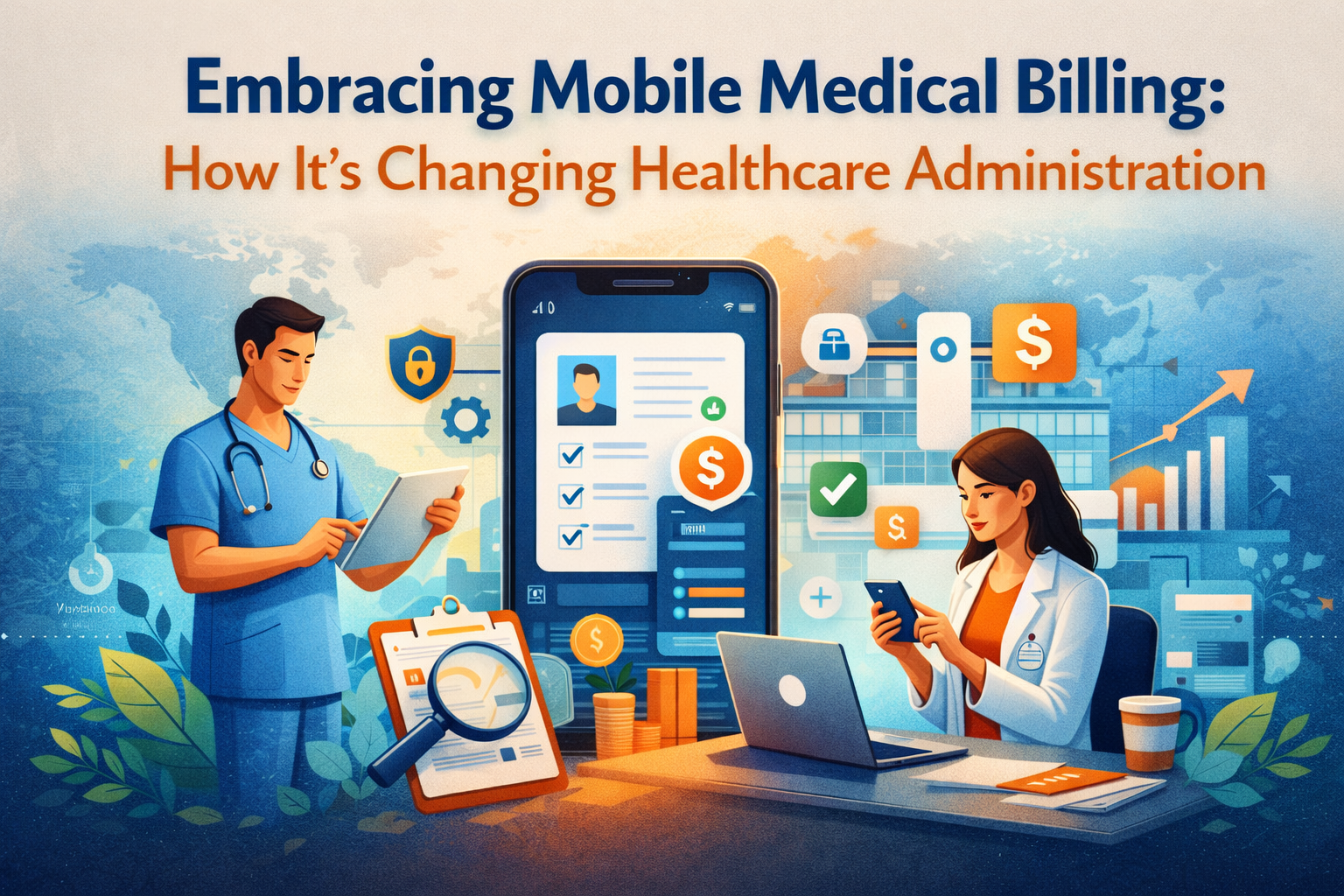
Healthcare is evolving rapidly, and technology plays a huge role in that transformation. One of the most significant shifts in recent years is the rise of mobile medical billing, a practice that allows healthcare providers to manage billing tasks on the go. With busy schedules, increasing patient loads, and complex administrative requirements, clinicians and office staff alike are seeking solutions that make their work more efficient and less stressful. Mobile medical billing offers exactly that: a way to blend flexibility with accuracy, bringing clarity to the financial side of healthcare.
What Is Mobile Medical Billing?
At its core, mobile medical billing refers to performing billing-related activities using mobile devices such as smartphones or tablets. Rather than being tied to a desktop computer in the office, staff and clinicians can access billing functions anytime and from virtually anywhere. These tasks can include entering patient charges, reviewing claims, checking claim status, and handling denials or adjustments.
Mobile medical billing is an extension of electronic billing systems that integrates key administrative functions into portable, user-friendly interfaces. It doesn’t replace core billing infrastructure, but it enhances it by making essential features more accessible and adaptable to real-world workflows.
Why Mobile Medical Billing Matters
Healthcare providers juggle many responsibilities. Between patient care, documentation, meetings, and quality improvement activities, there’s little time left for complex administrative tasks. That’s where mobile medical billing comes in—by reducing friction in billing operations and giving teams more flexibility without sacrificing accuracy.
Here are some compelling reasons why this approach matters:
1. Improved Accessibility and Flexibility
Traditional billing systems often require staff to be at a desk in a specific location. That’s not always practical in fast-paced environments like hospitals, urgent care centers, or multi-location practices. With mobile medical billing, essential tasks can be completed from virtually anywhere—whether it’s a clinician’s office, a patient room, or even offsite. This accessibility supports real-time work, minimizing the backlog that can accumulate when billing tasks are delayed.
2. Faster Charge Capture and Claim Submission
One of the most important parts of the billing process is charge capture—the act of recording charges for services rendered. When charge capture is delayed, it increases the risk of missing billable items and slows down the revenue cycle. Mobile medical billing allows clinicians and staff to enter charges at the point of care or immediately after, reducing errors and ensuring charges are recorded promptly. When those charges are submitted more quickly, claims are processed sooner, leading to better cash flow.
3. Reduced Administrative Stress
Billing tasks can be tedious and time-consuming. Pushing them off until later often leads to errors, backlogs, and stress. Mobile medical billing helps alleviate this by allowing staff to tackle small billing tasks as they arise throughout the day rather than waiting for a designated billing block. Breaking up work into manageable pieces can improve accuracy and reduce burnout.
4. Better Communication Among Teams
When billing information is accessible on mobile devices, clinicians and administrative staff can more easily collaborate. For example, a charge that needs clarification can be reviewed by the right person without having to wait until everyone is in the office. This fluid communication supports faster decision-making and improves overall workflow.
Practical Uses of Mobile Medical Billing
Mobile medical billing isn’t just a convenience—it has practical applications that make it a valuable tool for many healthcare settings.
Real-Time Charge Entry at the Point of Care
Imagine a clinician finishing a patient visit and immediately entering billable services into the system via a tablet. This practice minimizes forgotten charges and ensures that documentation and billing stay aligned.
On-the-Go Claim Tracking
Mobile access allows billing staff to check the status of claims, see which ones are pending, and identify which need follow-up. Rather than waiting to log into a desktop system, staff can respond quickly to issues as they arise.
Instant Denial Management
Claim denials slow down revenue flow and require attention. Mobile medical billing means denials can be addressed promptly—important notifications can be reviewed, corrected, and resubmitted even when staff are away from their desks.
Patient Financial Discussions
Mobile billing tools can also support communication with patients. For example, at the end of a visit, a provider might reference a mobile billing screen to explain expected patient responsibility or confirm insurance details. This transparency builds trust and helps patients understand their financial obligations.
Challenges and Considerations
While mobile medical billing brings many advantages, there are challenges to consider.
Security and Privacy
Healthcare data is sensitive and protected by privacy laws. Any mobile billing approach must include strong security measures such as encryption, secure login, and remote wipe capabilities to protect patient information.
Training and Adaptation
Switching to mobile billing means training staff to use new interfaces and workflows. For some team members, this may require adjustment and support.
Connectivity Dependence
Mobile solutions often depend on reliable internet access. Practices must ensure that staff can connect securely, even in locations with weaker signals.
The Human Side of Mobile Medical Billing
Beyond technology, what makes mobile medical billing meaningful is the human impact. Billing work doesn’t diminish in importance just because it’s administrative; it directly affects a practice’s financial health. When staff have tools that make their jobs easier and more flexible, morale improves, errors decline, and the entire office runs more smoothly.
For patients, efficient billing processes mean fewer errors on statements, quicker claim resolutions, and clearer communication about their financial responsibilities. In a time when healthcare costs are a major concern for many families, clarity and accuracy in billing contribute to better patient experiences.
Conclusion
Mobile medical billing is more than a trend—it’s a thoughtful response to the realities of modern healthcare work. By bringing essential billing functions into the hands of clinicians and administrative staff, this approach supports faster workflows, more accurate revenue capture, and reduced stress. It complements core billing processes and enhances the way teams work together.
As healthcare continues to evolve, tools like mobile medical billing will play an important role in helping practices stay agile, responsive, and financially sound—without losing sight of the human touch that defines quality patient care.